

Introduction: The Chittagong Hill Tracts is located in the southern corner of Bangladesh. It shares international borders with the Indian states of Mizoram and Tripura, and the Rakhine State of Myanmar. Currently, the Chittagong Hill Tracts are part of Bangladesh, but after the partition, it was part of Pakistan. Currently, eleven indigenous communities reside in the Chittagong Hill Tracts, among which the Chakma, Marma, and Tripura communities are the most numerous. This is due to their geographical location and shared historical background. Recently, the diversity of the Chittagong Hill Tracts has been under threat due to the increasing population of the plains people of Bangladesh in the hills.
The History of the Chakmas and the Seeds of Rebellion: To understand the history of the Chittagong Hill Tracts, one must first understand the history of the Chakmas. It is believed that the Chakmas were the indigenous people of northern Arakan. They could never expand their empire like the Tripuras. The rulers of northern Arakan began expanding their empire into the Chittagong Hill Tracts between the 9th and 11th centuries (Recorded in Chittagong Chara Pala). The history of the Chakma kings spans 23 rulers, with the inclusion of Debashish Raja making it 24. In 1404, Chakma Raja Naraimeikhala declared rebellion against the Arakan king Minto. Later, he came to the port city of Chittagong and expelled the Arakanese forces from the hills. At that time, the Sultan of Bengal, Ahmad Shah, helped the Chakma king. In 1665, Aurangzeb’s general Shrestha Khan captured the port city of Chittagong. However, they could never capture Tripura and the Chittagong Hill Tracts. Before the British occupation, the relationship between the Sultan of Bengal, the Chakma kings, and the Tripura kings was quite good. In 1760, the Mughals handed over the boundary to the British East India Company, which then took possession of the port city of Chittagong. The boundary was determined, giving the Chakma king all the hills across the Feni and Sangu rivers and up to the Nazimpur road, and the Kukis were given the last boundary. The then Chakma king was Shermast Khan (the title ‘Khan’ was adopted by the Chakma kings to show allegiance to the Mughal rulers). However, it wasn’t long before disputes began between the Chakma king and the East India Company, with the company demanding an annual tribute of 501 stupa of cotton from the Chakma king. The Chakma king protested through rebellion, starting the first phase of the Anglo-Chakma War. Initially, the British did not take it seriously, but in 1776, they expanded the boundary during the time of Hutchison. The war intensified during the legendary Raja Jan Box Khan’s time, who attacked the British in the plains of Chittagong several times with the help of his fierce commander Ranu Khan. He launched attacks in 1782, 1783, 1784, and 1785. The then collector of Chittagong, James Irwin, sent a letter to Kolkata seeking help. Major Ellerker came forward, assigning Captain Robert Anderson to the task. The 2nd Battalion of the infantry unit was sent to capture the Chakma king. On January 10, 1785, Anderson set out by boat up the Karnafuli River. On January 17, several skirmishes took place with Ranu Khan’s Chakma forces. On January 21, Captain Anderson captured Ranu Khan’s residence but couldn’t capture Ranu Khan himself. On January 30, the British captured the royal palace, destroying several Chakma villages and taking hundreds of Chakma prisoners. Despite this, the legendary Jan Box Khan and his commander Ranu Khan continued guerrilla attacks against the British. In 1800, the brave daughter Kalabi was born in a humble home in Kutukchari, Rangamati, who later became the rebel queen Kalindi Rani. She ruled for 41 years, leading rebellions against the British from 1832 to 1873, during which she refused to meet any British government representative. When the then commissioner of Chittagong, T.H. Lewin, wanted to meet her, she replied, “I do not want to see the face of a monkey.” Kalindi Rani is considered one of the bravest rulers among the Chakma leaders. However, the Chakmas maintained good relations with their neighbors for centuries. There were no major wars with the Tripura king, the Lushai, or the Sultan of Bengal. Rather, during the Mughal era, the Sultan of Bengal, the Chakma king, and the Tripura king formed a resistance together. Chittagong hill tracts were always free and self-independent according to Bhaumik Neither the Mizoram nor the Chittagong hill tracts were ever part of any subcontinental empire. Mughal never directly controlled the Chittagong hill tracts also Tripura remained a sovereign state, at least on paper, even after the British had annexed much of the subcontinent. Naga hills and the tribal region of Upper Burma, the tribals in the North East region had reason to resent their loss of independence in the post-colonial order.

The Twentieth-Century Rebellion: The British controlled the Chittagong Hill Tracts from afar, limiting their rule to annual tributes of cotton. However, the seeds of rebellion are passed down through generations. In 1920, Kamini Mohan Dewan, the first chairman of the Hill Peoples’ Association, traveled to Bombay, India, to meet with Congress leaders. His purpose was to seek the declaration of the Chittagong Hill Tracts as a province of India. Congress leader Chittaranjan Das said, “In free India, everyone will have their own political system as they want.” He wasn’t the only one striving to free the hills. Educated leaders like Sneha Kumar Chakma worked to liberate the hills. He held several meetings with Congress leaders and had a good relationship with Subhas Bose, who encouraged him to take up arms against the British. In 1947, the Boundary Commission assigned the Chittagong Hill Tracts to Pakistan, primarily because the leaders of the Pakistan Muslim League strongly desired it. Under Pakistani rule, it was designated an “Excluded Area.” In 1960, during Pakistani rule, the Kaptai Dam was built on the Karnafuli River, displacing thousands of people who sought refuge in Tripura and Mizoram. Some of those who went to Tripura were later sent to Arunachal and Assam. Due to the valley or land area going underwater because of the dam, the communities had to become expatriates. During Pakistani rule, the brutality of the Pakistani government was evident. In 1971, the liberation forces, along with the hills, freed the area from Pakistan, and it was integrated into the new country of Bangladesh. In 1972, the new leader of the country, Sheikh Mujibur Rahman, expressed his inability to grant autonomy to the Chittagong Hill Tracts. At that time, the young leader of the hills, N.N. Larma, led the region. Mujibur Rahman, during his visit to Rangamati, said there were no other nations in this country, everyone was Bengali, and those who were not Bengali must become Bengali, issuing threats. On October 21, the only leader from the hills, Member of Parliament N.N. Larma, protested and walked out of the national parliament. This historic event marked a turning point in hill politics. He and a few others formed a rebel group, later known as the Shanti Bahini (Peace Force). The Shanti Bahini included members from all communities. In a personal interview, former Shanti Bahini commander and current head of the Jana Samhati Samiti, Manabendra Bodhipriya Santu Larma, said that during the 1980s, the Shanti Bahini had over 50,000 members. After the peace accord, they gradually returned to normal life.
History Repeats Itself:
Although rebellions are often bloody, they are sometimes the only way to stop bloodshed. From 1980 to 1990, there were intense conflicts between the Bangladesh government and the Shanti Bahini, resulting in thousands of deaths on both sides. Various non-governmental human rights organizations highlighted human rights violations by the Bangladesh Army. Notably, the April 10, 1992 massacre in Logang, Panchhari Upazila, Khagrachari, where the army allegedly killed 400 hill people, including women, children, the elderly, and youths (Wikipedia). This news spread widely, especially in the Indian media and influential outlets like the New York Times, which reported on the Logang massacre. Despite this, the rebellion never ceased and continues to this day. This rebellion is not just for autonomy but for equality, free speech, and free will. Generals like Ershad and Ziaur Rahman repeatedly tried to keep the Chittagong Hill Tracts under strict control, but they could never imprison the free spirit.

A Twentieth-Century Rebellion of Hope; During the peace accord in 1997, a faction of the Hill Students’ Council opposed the peace agreement. They demanded “autonomy.” With this dream in mind, a political party called UPDF was formed, led by the brilliant student leader Prasiddh Bikash Khisa. In 2006, another organization named N N Larma was born, led by veteran politician Sudha Sindhu and military leader Major Pele, becoming influential in the Khagrachari district. A decade later, another organization named Democratic UPDF was formed. A unique feature of these parties is that people from all communities can represent them. However, the scenario changes when ethnic parties are formed, such as the Mro Party, the Mog Party, and the Kuki-Chin Party. To join these parties, one has to be from their respective communities, which is why these ethnic parties haven’t been very successful in hill politics.
The rise of the new political parties was quite unusual, as analysts believe that most of these new parties were influenced or backed by external forces. Anurag Chakma, Ph.D., an expert on peace and conflict, explains that peace agreements were established in many countries from 1990 to 2015. This trend was likely due to the ideological decline following the collapse of the Soviet Union, leading many countries worldwide, including those in Africa, South Asia, and Southeast Asia, to engage in peace agreements with various groups. Recently, the Nagas have fully returned to the peace process, holding over 50 rounds of talks between the government and Naga rebel organizations to implement the peace agreement. However, when discussing the 1997 peace accord of the Chittagong Hill Tracts, it seems much less progressive.
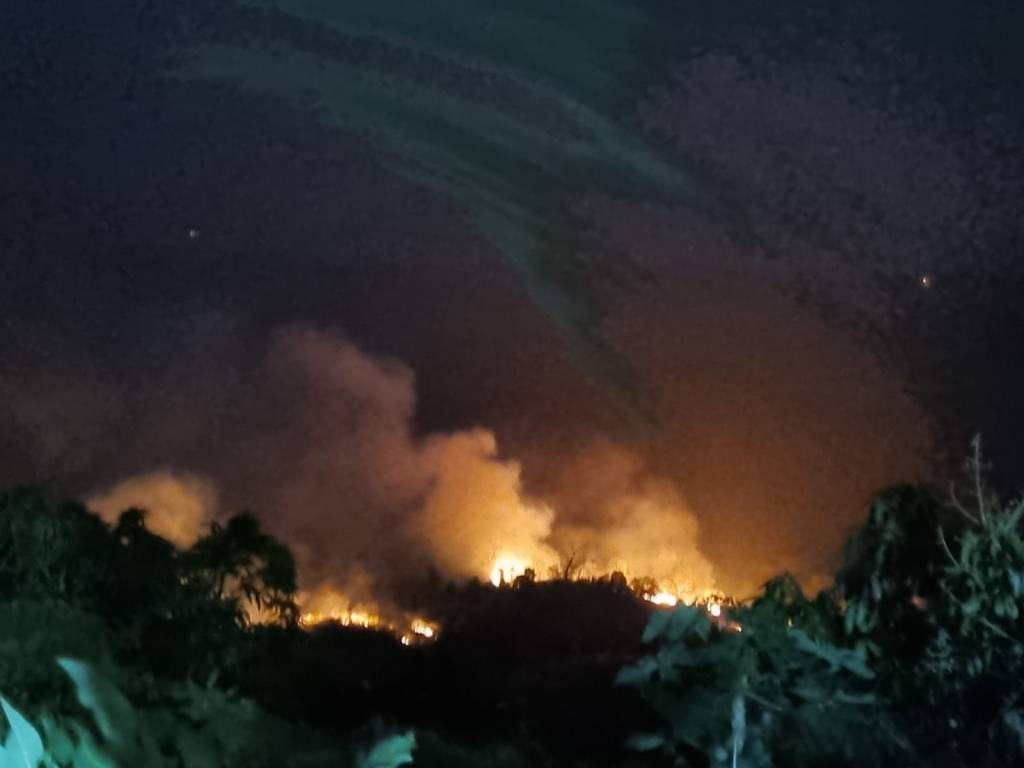
Issues like altering the demographic composition by bringing in Bengalis, forcibly seizing the land of the indigenous people, women’s rights, fundamental rights, and the recognition of ethnic identities are still ongoing. The government’s reluctance or lack of genuine intent to address these problems creates significant obstacles. Analysts repeatedly highlight that the failure to implement the peace accord leads to the emergence of new parties and further reinforces the parties’ claims about the government’s unwillingness to implement the accord. It can be said that the peace agreement is currently hanging by a thread, with either side ready to assert their stance at any moment.
Economic Position in the Twenty-First Century:
In the 1960s, the creation of the Kaptai Lake resulted in thousands of hectares of agricultural land being submerged. This submersion led to the displacement of many hill people, forcing them to become landless. Some people migrated while others moved deeper into the hills. Similar to the displacement faced by Palestinians due to Israeli settlers, the indigenous people had to relinquish their land to nearly a million settlers. The government-sponsored settlement program began in 1975, reflecting the government’s perspective on the indigenous people. The settlers took over millions of hectares, further marginalizing the already economically distressed indigenous communities. With the arrival of settlers, deforestation began, and they started exploiting the limited resources. While the indigenous people lived in harmony with the environment, the settlers focused on environmental degradation. From 1975 to 1997, settlers occupied land and resources without any hindrance, leaving the indigenous communities repeatedly searching for their identity, whether through political decisions or social means. Economic development remains a distant dream for the hill people. Even if some economic progress is made, overall, there has been no substantial improvement in the living standards or actual development for the hill people.
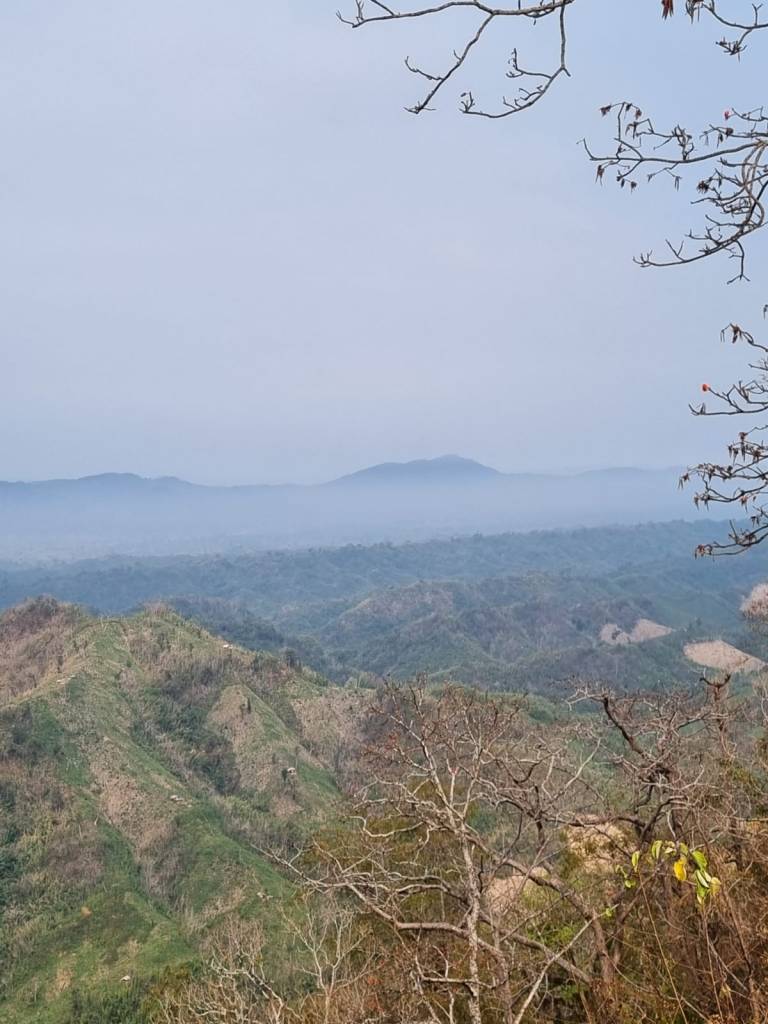
There is a gas field in the hills from which the government extracts billions of cubic meters of gas. However, the hill people never benefit from this; there are no gas connections in their homes. Instead, this gas is sent to Chittagong to keep the factories running. There is also a hydropower plant in the Kaptai area with a production capacity of 200 megawatts during the rainy season, but even half of this is not provided to the hills. Resources like bamboo, teak wood, and raw materials worth billions of takas are taken by the Bengali settlers. Economically, the hill people are crippled, with no women empowerment programs or any kind of facilities. Whatever little government support exists is limited and settler-centric. The indigenous people living deep in the hills receive no economic benefits and continue to rely on traditional jhum (shifting) cultivation for their livelihood. Although government jobs were once provided on a district basis, this practice has ceased. The government has also revoked the quota rights for the indigenous people, forcing them to compete for jobs with the larger population. The current economic situation reflects that the hill people have been unable to achieve economic advancement due to political pressure.
Conclusion: Therefore the idea of revolution for CHT people is very known to. After the collapse of the Soviet Union, the tide of revolution died down. In this opportunity, nation-states come to peace agreements with other populations and rebel groups in their respective countries. The evidence that revolutions change was clear, with ideological changes the course of revolutions also changed. The mountains have changed, and the tide of movement in the mountains has not stopped when the trend of the movement has changed. Maybe in time revolution will get life again!
References :
1. Stop genocide in CHT by ven Aggavangsa Mahathero, Chakma Rajguru.culcatta:1991
2. An account of genocide in Panchari and outer area PCJSS
3.Kamini Mohan Dewan,Parbattya Chatogram ek din sevaker jibon kahini,1970
4. Sneha kumar Chakma, Ananda bazar patrika,culcatta 4 July 1986.
5. Alexander Mackenzie, history of the relations of the government with the hill tribes of north east Frontier, Calcutta,1884
6. R.H.S. Hutchison, an account of the Chittagong hill tracts, Calcatta, 1906
7. T.H.Lewin, A Fly on the Wheel, or, How I helped govern India, London, 1912
8. Insurgent crossfire North East India by Subir Bhaumik, 1996
9. Kalindi Rani by Paritosh Chakma, 2022
10. Chakma jatir Itihas by Shordidu Shekhar Chakma
 Chakma Digital Library