

What does “Chakma Script” mean for the Chakma community?
On June 16, 2020, an international conference on endangered scripts was held online via Zoom. The main speaker, Zachary Quinn Scheuren, a script specialist and font developer, discussed several endangered scripts, including Chakma. Mr. Bivuti Chakma, the primary Chakma Unicode developer, collaborates closely with Scheuren.
For centuries, the Chakma script was neglected or restricted to a few Tantric Chakma Buddhist priests. Like many other Indian and Southeast Asian scripts, the Chakma script is derived from the Brahmi script, specifically the Kadamba Brahmi script, which still resembles the Chakma script.

The Chakma tribe in Myanmar has been striving to revive their lost identity amid geopolitical issues, ethnic persecution, racial discrimination, and religious discrimination. Decades ago, education was a luxury only the wealthy Chakmas could afford. However, even these educated individuals often adopted Bengali customs and language, resulting in a loss of their native tongue. Many Chakma children raised with Bengali influences cannot speak their native language, CHAKMA, properly. This phenomenon has been observed in both Bangladesh and the USA.
In Bangladesh, the Chakma community faces propaganda and misinformation spread by biased authors who publish unfounded claims about Chakmas. These authors have never interviewed Chakma individuals, leading to false and offensive narratives. If the situation were reversed, with Chakma writers spreading similar falsehoods about Bengali culture, it would undoubtedly provoke severe backlash, including violence against Buddhist villages. This reflects the clear racial and religious discrimination by Bengali publishers against the Chakma people and Buddhism.
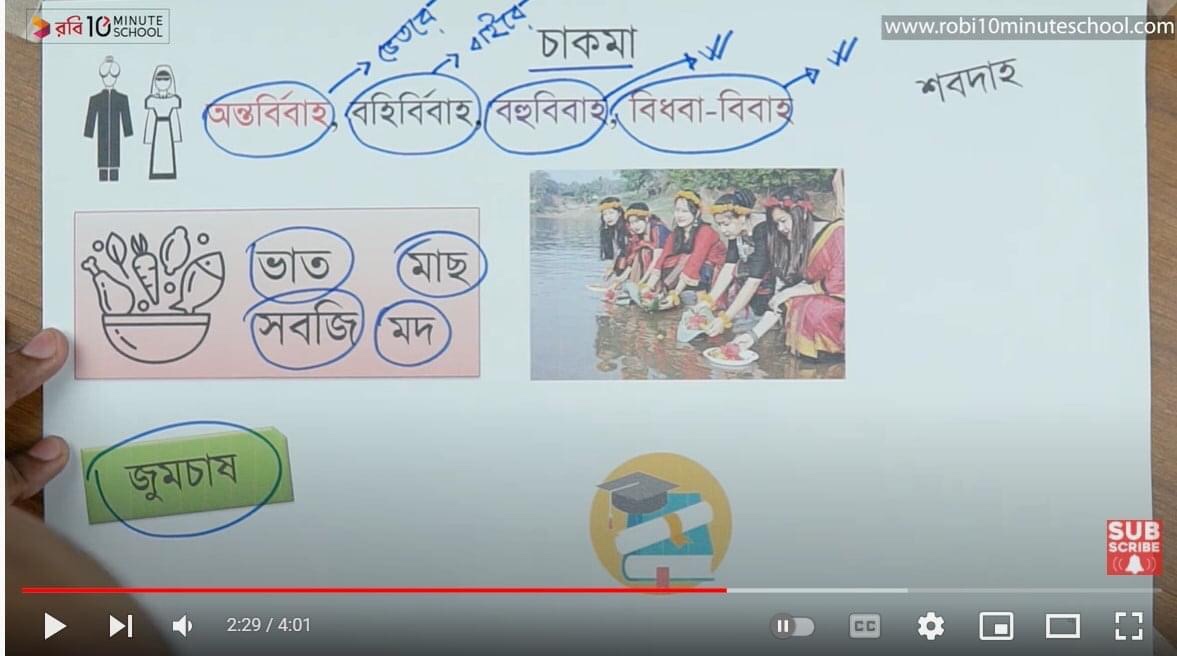


Last year, several books by racist Bengali writers, including some endorsed by the Bangladesh educational board, falsely claimed that wine is a staple food of the Chakma people. Such derogatory statements intentionally insult Buddhism and hurt Buddhist sentiments. Numerous videos on YouTube and social media further degrade and discriminate against the Chakma community. The Chakmas are often targeted more than other tribes in Bangladesh due to their higher visibility in media and social platforms. Since 1971, the indigenous minorities of the Chittagong Hill Tracts (CHT) have faced genocides, arson attacks, land grabbing, rapes, and ongoing racial and religious discrimination.
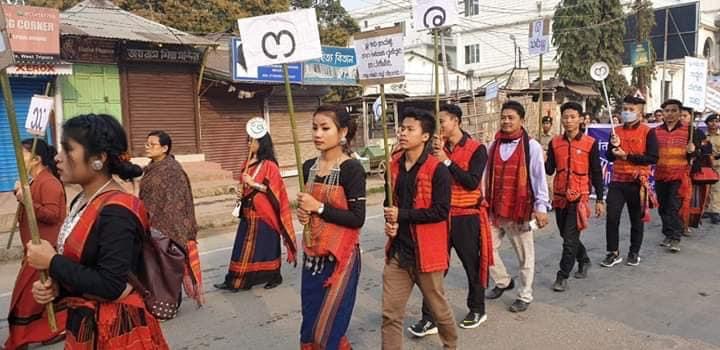

Chakmas in India
Chakmas in India’s northern states also face ethnic discrimination and strive to preserve their mother tongue. Despite these challenges, Indian Chakmas have maintained the originality of their language. In Tripura, efforts are underway to legalize Chakma textbooks in primary schools. In Mizoram, the Chakma Autonomous District Council (CADC) has legalized Chakma textbooks at the primary level since 1994.
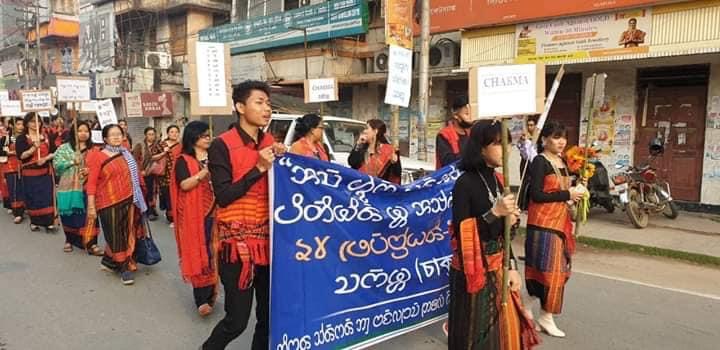
The Chakma community in Tripura, India, celebrates International Mother Language Day with banners written in the Chakma script. In the CHT, Chakma Buddhists face systematic Bengalization and Islamization in a highly militarized region. Many indigenous families are forcibly converted to Islam, and their children are trafficked and Islamized.
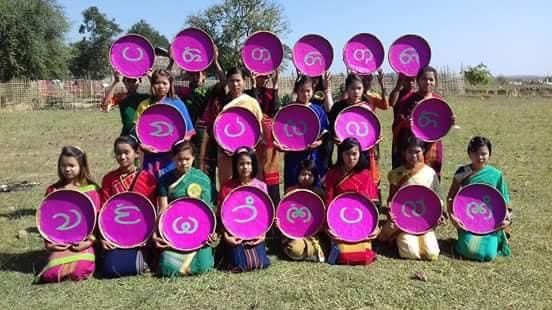
In Myanmar, only 80,000 Chakmas remain after centuries of struggle. These Chakmas, regarded as the ancestors of Indian and CHT Chakmas, have nearly forgotten their language. However, efforts are underway to revive their Chakma identity, language, culture, and script, with support from Chakma people in India and Bangladesh.
Thanks to Mr. Bivuti Chakma, the Chakma script has been digitized and reintroduced on social media. Many social media groups, pages, and accounts are now learning and promoting the Chakma script. Despite facing discrimination, the Chakma people are working hard to preserve their language, script, culture, and identity. Chakmas in Arunachal Pradesh are still fighting for citizenship rights, while those in Tripura strive to promote Chakma textbooks. Mizoram Chakmas combat inequality and racial discrimination while preserving their script. Chakmas in Assam, often called orphans of Indian Chakmas due to their poor living conditions, struggle for survival. In the CHT, Chakmas face systematic ethnic cleansing, Bengalization, Islamization, and persecution. Meanwhile, Myanmar Chakmas work to revive their lost culture, language, and script.
Losing the Chakma language and script would signify the near extinction of the Chakma community. Preserving the script means preserving an endangered community and its culture. Chakma children in the diaspora, including those in the USA, France, Japan, the UK, Canada, and Australia, are already at risk of losing their language and culture. The hope for survival and preservation lies with those in India and Bangladesh. If they too forget or neglect the Chakma language and script, there will be no sign of the Chakma people in the next century.
Therefore, it is imperative to act together now to promote and preserve the Chakma language and script.
 Chakma Digital Library